
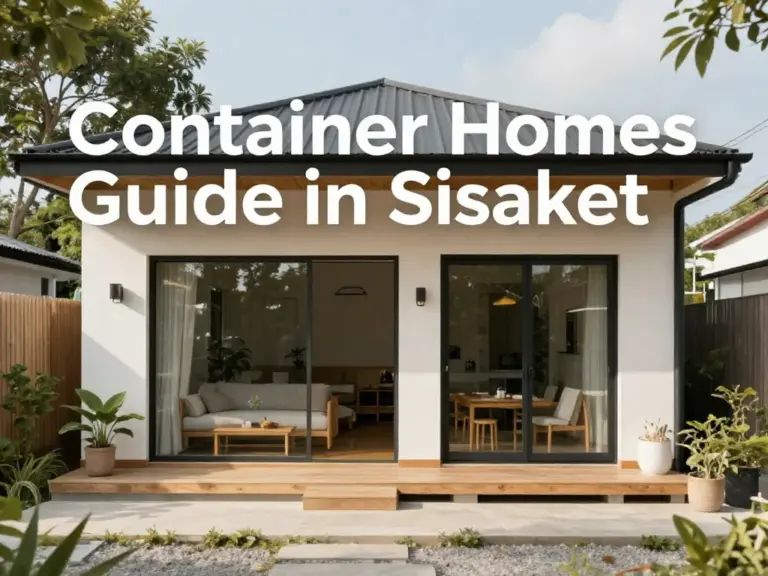
A Complete Guide to Container Homes in Sisaket
Building a home is a significant investment, and in a region like Sisaket, homeowners are increasingly looking for efficient, durable, and cost-effective alternatives to traditional brick-and-mortar structures. If you are considering container homes in Sisaket, you are joining a growing trend of architectural innovation that prioritizes modular design and rapid construction. This guide explores the practicalities of shipping container architecture, specifically tailored to the unique climate and regulatory environment of Northeastern Thailand.
Why Choose Container Homes in Sisaket?
The appeal of container homes lies in their structural integrity and versatility. Shipping containers are designed to withstand harsh maritime environments, making them inherently robust. In Sisaket, where the climate ranges from intense heat to significant seasonal rainfall, these steel structures offer a solid foundation that can be modified to suit tropical living.
Benefits of Modular Construction
- Speed of Construction: Because the main structural shell is already built, on-site assembly is significantly faster than traditional masonry.
- Cost Predictability: Modular units allow for better budget control, as the price of the container shell is relatively fixed compared to fluctuating raw material costs.
- Sustainability: Repurposing shipping containers reduces the need for new construction materials, aligning with modern eco-conscious building practices.
Key Considerations for the Local Climate
The climate in Sisaket is a critical factor in your design strategy. Steel is highly conductive, meaning it can absorb heat rapidly. Without proper intervention, a container home can quickly become uncomfortable during the hottest months of the year.
Thermal Insulation and Ventilation
To make container homes in Sisaket livable, insulation is non-negotiable. Spray foam insulation is often the most effective solution as it seals gaps and prevents thermal bridging. Additionally, incorporating a secondary roof structure—often called a ‘flying roof’—can provide essential shade, allowing airflow between the roof and the container top, which drastically lowers interior temperatures.
| Feature | Traditional Home | Container Home |
|---|---|---|
| Construction Speed | Slow (Months) | Fast (Weeks) |
| Thermal Efficiency | High (with brick) | Requires high-grade insulation |
| Durability | High | High (Corrosion-resistant steel) |
| Flexibility | Moderate | High (Modular) |
Before you purchase your first container, you must engage with local municipal authorities in Sisaket. Building codes in Thailand are strict regarding structural safety and land usage. Even if your home is modular, it is still considered a permanent structure under Thai law if it is anchored to a foundation.
Practical Checklist for Your Build
To ensure your project runs smoothly, follow this step-by-step checklist:
- Site Preparation: Ensure the land is leveled and soil-tested to support the weight of steel containers.
- Container Inspection: Choose ‘One-Trip’ containers rather than older, heavily used ones to avoid rust and structural fatigue.
- Foundation Design: Depending on soil conditions, a concrete pier or slab foundation is essential to prevent shifting.
- Permits: Submit architectural drawings to the local administrative office (OrBorTor) for approval.
- Professional Fabrication: Hire welders experienced in modifying shipping containers, as the steel is high-tensile and requires specific cutting techniques.
Maintenance and Longevity
While steel is durable, it is not immune to corrosion. In the humid environment of Sisaket, regular maintenance is vital. Inspecting the exterior paint for chips or scratches and applying rust-inhibiting coatings every few years will extend the life of your home significantly. Proper drainage around the foundation is also essential to prevent moisture from pooling at the base of the containers.
Frequently Asked Questions (FAQ)
Are shipping container homes safe in Sisaket?
Yes, provided they are engineered correctly. When modified by professionals and anchored to a proper foundation, they can be just as safe and secure as traditional homes.
Can I build a multi-story container home?
Yes, shipping containers are designed to be stacked. However, structural reinforcements are necessary at the connection points, and you will need to ensure the foundation can support the increased weight.
How do I keep a container home cool in Thailand?
The best approach is a combination of high-quality spray foam insulation, reflective exterior paint, and a secondary roof structure to provide shade and allow for cross-ventilation.
Are container homes cheaper than brick houses?
Not always. While the shell is cheaper, the costs of insulation, specialized welding, and interior fitting can sometimes equal or exceed the cost of traditional construction. It is a choice of efficiency and aesthetics rather than purely cost-saving.
References
Department of Public Works and Town & Country Planning (Thailand)