
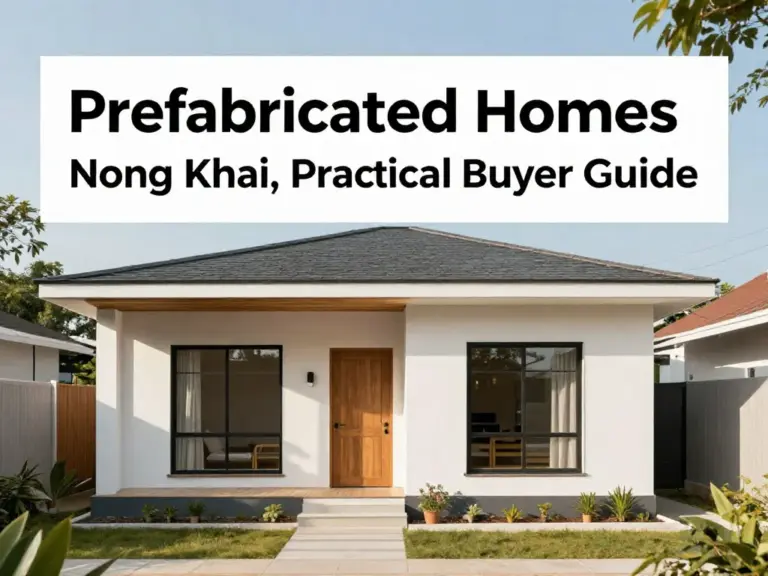
Prefabricated Homes in Nong Khai: A Practical Guide for Buyers
The housing market in Northeast Thailand is evolving, and prefabricated homes in Nong Khai are becoming an increasingly popular choice for savvy investors and residents alike. As the region grows, individuals looking for faster construction timelines, cost-efficiency, and modern designs are turning away from traditional brick-and-mortar builds in favor of modular or factory-built solutions. This guide aims to provide a comprehensive look at the realities of purchasing and building a prefab home in this riverside province.
Understanding Prefabricated Housing in the Thai Context
Prefabricated homes, often referred to as modular or knockdown houses in Thailand, are structures manufactured in a factory setting before being transported to the final site for assembly. Unlike traditional construction, which relies heavily on on-site labor and materials, prefab homes utilize standardized components. In Nong Khai, where the climate is characterized by intense heat and seasonal humidity, these homes are engineered to meet specific structural demands while offering better insulation and faster completion times.
Why Choose Prefabricated Homes in Nong Khai?
The decision to invest in a prefabricated home often comes down to three main pillars: speed, cost predictability, and durability. Here is why many buyers in the region are making the switch:
- Construction Speed: While a traditional house might take 8 to 12 months to complete, a prefab home can often be ready for occupancy in as little as 3 to 4 months.
- Quality Control: Because the components are built in a controlled factory environment, there is significantly less risk of material degradation from rain or sun exposure during the building process.
- Cost Predictability: Prefabricated builds typically operate on fixed-price contracts, reducing the likelihood of the budget-draining surprises common in traditional construction projects.
| Feature | Prefabricated Home | Traditional Construction |
|---|---|---|
| Construction Time | Fast (3-5 months) | Slow (8-12+ months) |
| Cost Predictability | High (Fixed price) | Low (Variable) |
| Customization | Moderate (Modular options) | High (Fully bespoke) |
| Site Waste | Minimal | High |
Key Considerations for Nong Khai Buyers
Before signing a contract, you must evaluate the specific environmental and logistical conditions of Nong Khai. Building near the Mekong River, for example, requires different considerations regarding soil stability and flood risk compared to building on higher ground in the outer districts like Phon Phisai or Tha Bo.
Soil Conditions and Foundation
Even though the house structure is lighter than traditional concrete, a solid foundation is non-negotiable. Ensure your contractor performs a soil test. Nong Khai’s geography can vary, and a prefab structure—while durable—needs a stable, level base to prevent long-term settling issues.
Transportation Logistics
One of the often-overlooked costs is the delivery of the modules. If your land is located down narrow, unpaved rural roads, large delivery trucks may struggle to access the site. Always confirm with your manufacturer that they have conducted a site survey to ensure their transport vehicles can physically reach your property.
The Purchasing Checklist
Navigating the purchase of a prefab home requires diligence. Follow this checklist to protect your investment:
- Verify Contractor Credentials: Check for previous projects in the region and ask for references.
- Review the Warranty: Ensure the warranty covers structural integrity, roofing, and plumbing fixtures.
- Confirm Permitting: Prefab homes still require building permits in Thailand. Confirm who is responsible for obtaining these documents.
- Check Material Specifications: Ensure the materials used are suitable for the Thai climate (e.g., heat-resistant roofing, termite-treated wood/composite).
- Inspect Sample Units: If possible, visit a show unit to assess the finish quality and overall structural feel.
Addressing Common Myths
There is a misconception that prefab homes are “temporary” or “low quality.” In reality, modern factory-built homes are engineered to meet strict building codes and are often more energy-efficient than older, traditionally built Thai homes. With proper insulation and high-quality materials, these structures are built to last for decades, not just a few years.
Frequently Asked Questions (FAQ)
Yes, when built to standard specifications, they are designed to withstand the region’s heavy monsoon rains and high temperatures. However, always ensure your contractor includes proper insulation and drainage systems.
Yes. Regardless of the construction method, any permanent structure built in Thailand requires a building permit from the local municipality (OrBorTor or Tessaban).
Most manufacturers offer a range of modular designs. While full customization is more expensive, many companies allow you to modify layouts, move interior walls, or select different finishes.
While the manufacturing happens off-site, the on-site preparation (foundation) and assembly typically take between 3 and 5 months, depending on the size of the house and site accessibility.
Conclusion
Choosing prefabricated homes in Nong Khai offers a modern, efficient alternative to traditional construction. By understanding the logistics, prioritizing site preparation, and working with reputable manufacturers, you can secure a durable and comfortable home. Always conduct thorough research and ensure all legal permits are in place before breaking ground on your new property.
References
Department of Public Works and Town & Country Planning (Thailand)
Nong Khai Provincial Government Official Portal