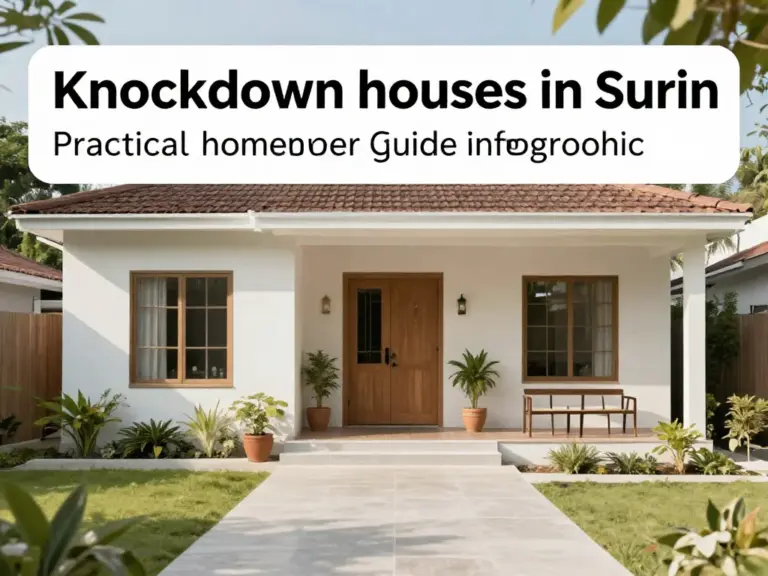
Knockdown Houses in Surin: A Practical Guide for Homeowners
- Knockdown Houses in Surin: A Practical Guide for Homeowners
The construction landscape in Thailand is rapidly evolving, and for many residents in the Isan region, the interest in modular architecture has never been higher. Specifically, the trend of purchasing knockdown houses in Surin has become a popular solution for those seeking affordable, efficient, and aesthetic living spaces. Unlike traditional on-site construction, which can drag on for months, these prefabricated structures offer a streamlined approach to home ownership. This guide explores the practicalities, benefits, and essential considerations for anyone looking to invest in a knockdown home in this province.
Understanding the Knockdown House Concept
A knockdown house, often referred to as a modular or prefab home, is a structure built primarily off-site in a controlled factory environment. Once the components—walls, roof trusses, and floor panels—are completed, they are transported to the final site in Surin to be assembled. This method allows for significantly reduced waste, predictable costs, and a much faster assembly time compared to conventional brick-and-mortar builds. For homeowners in Surin, this means you can move into your new space in weeks rather than months.
Why Choose Knockdown Houses in Surin?
Surin’s geography, characterized by vast agricultural lands and distinct seasonal weather patterns, makes it an ideal candidate for modular construction. The primary reasons homeowners gravitate toward these structures include:
- Speed of Construction: The factory-build process is immune to the delays often caused by local weather fluctuations, ensuring your timeline stays on track.
- Cost Predictability: Because the structure is built to a set design, there are fewer “hidden costs” associated with on-site labor and material waste.
- Mobility: Many knockdown designs are engineered to be disassembled or relocated if your circumstances change, providing a level of flexibility that traditional homes cannot match.
- Design Variety: Modern manufacturers offer everything from traditional Thai-style teak structures to sleek, minimalist steel-frame homes.
Key Material Considerations for the Local Climate
When selecting a knockdown house for the Surin climate, material choice is paramount. The province experiences intense heat and, during the rainy season, significant humidity. You must ensure that your choice of materials can withstand these stressors over the long term.
Wood vs. Steel Frames
While teak remains a classic choice for its aesthetic appeal, it requires significant maintenance to prevent termite damage and warping. Steel-frame structures, often clad in fiber-cement boards, are becoming the preferred choice for many. They are immune to termites, offer excellent structural integrity, and provide better insulation when paired with modern thermal barriers.
| Feature | Traditional Brick House | Knockdown House |
|---|---|---|
| Construction Time | 3-6 Months | 2-4 Weeks |
| Cost | Variable/High | Fixed/Budget-Friendly |
| Flexibility | Permanent | High (Some are relocatable) |
| Foundation Requirements | Heavy/Deep | Light/Minimalist |
The Construction Process: From Foundation to Finish
While the house itself is built elsewhere, the foundation work is your responsibility. This is the most critical stage of the project. A poorly prepared foundation can lead to shifting, cracked walls, and water seepage. In Surin, where soil composition can vary, it is highly recommended to consult with a local contractor to ensure the concrete slab or pier foundation is properly leveled and reinforced to handle the weight of your modular home.
Checklist for Prospective Homeowners
- Land Survey: Confirm your land ownership and ensure access roads are wide enough for the transport trucks to deliver the house sections.
- Permits: Even though it is a ‘knockdown’ structure, you are still required to obtain a building permit from the local Surin municipality or OrBorTor (Subdistrict Administrative Organization).
- Utility Planning: Coordinate with local electricity and water providers early to arrange connections to your site.
- Warranty Verification: Ask the manufacturer specifically about the warranty on the roof, frame, and electrical wiring.
Common Challenges and How to Avoid Them
The biggest mistake homeowners make is assuming that ‘knockdown’ means ‘maintenance-free.’ While these homes are efficient, they still require regular care. Inspect the roof seals annually, especially before the monsoon season, to prevent leaks. Furthermore, ensure that the junction points between modular sections are properly caulked and sealed to prevent pests from entering.
Conclusion
Investing in knockdown houses in Surin is an excellent way to achieve home ownership without the traditional headaches of long-term construction. By carefully selecting your materials, preparing a solid foundation, and ensuring all local regulations are met, you can create a beautiful, functional, and durable home that fits your lifestyle perfectly. Take the time to visit showrooms, inspect previous projects, and choose a reputable builder who understands the specific needs of the Isan region.
Frequently Asked Questions (FAQ)
A: Yes, once assembled on a foundation, these homes are considered permanent residential structures and require the same building permits as traditional homes.
A: Many manufacturers offer modular designs that allow for some degree of customization, such as wall placement and finish materials, though structural changes are limited.
A: With proper maintenance and high-quality materials (especially steel frames), a knockdown house can last just as long as a traditional concrete home, often 30 to 50 years or more.