
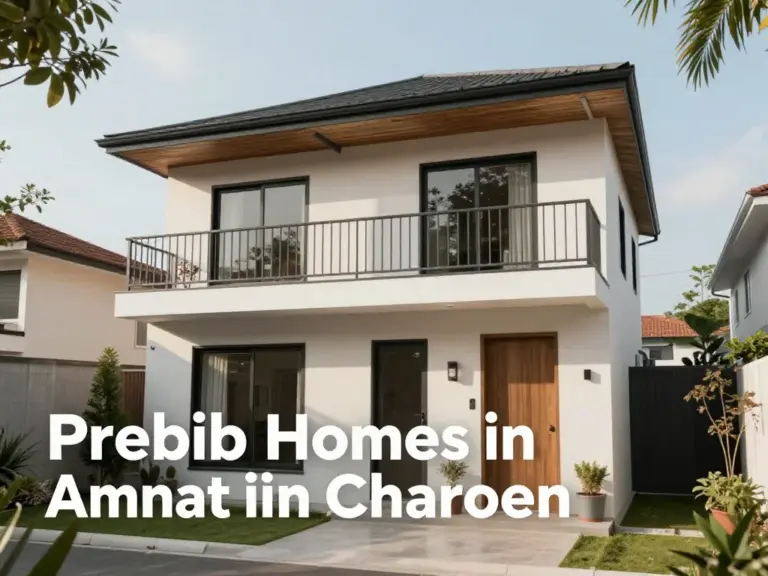
Prefab Homes in Amnat Charoen
The housing landscape in Thailand is rapidly evolving, and for residents in the northeastern province of Isan, the interest in modern, efficient construction is growing. Prefab homes in Amnat Charoen have emerged as a compelling alternative to traditional site-built houses, offering a blend of speed, cost-effectiveness, and architectural flexibility. Whether you are looking to build a primary residence, a vacation home, or a secondary structure on your family land, understanding the prefab process is essential for making an informed investment.
Understanding Prefabricated Construction
Prefabricated, or “prefab,” homes are residential buildings where components—such as wall panels, floor sections, and roof trusses—are manufactured in a controlled factory environment before being transported to the construction site for assembly. This method differs significantly from traditional “stick-built” construction, where every piece of lumber and brick is cut and assembled on-site, exposed to the elements.
For homeowners in Amnat Charoen, this means that the majority of the construction happens away from the local site, reducing the impact of rain, heat, and unpredictable weather delays that often plague conventional building projects in the region.
Why Choose Prefab Homes in Amnat Charoen?
The adoption of prefab homes in Amnat Charoen is driven by several key advantages that cater to the specific needs of local residents. As the demand for faster housing solutions increases, modular and prefab systems provide a reliable path to homeownership.
- Speed of Construction: Because the components are manufactured simultaneously with site preparation (foundations), the overall timeline is drastically reduced compared to traditional methods.
- Predictable Costs: Factory manufacturing minimizes material waste and labor inefficiencies. With a fixed-price contract, you are less likely to face the dreaded “budget creep” often associated with on-site construction.
- Quality Control: Building in a factory ensures that every joint, seal, and structural component meets rigorous standards, unaffected by the unpredictable weather conditions often found in the Isan region.
- Design Flexibility: Modern prefab systems are no longer limited to basic boxes. They offer customizable floor plans, modern aesthetics, and energy-efficient materials.
Comparative Analysis: Traditional vs. Prefab
| Feature | Traditional Construction | Prefabricated Homes |
|---|---|---|
| Construction Time | Slow (often delayed by weather) | Fast (factory-controlled) |
| Cost Predictability | Variable (often fluctuates) | High (fixed pricing) |
| Quality Consistency | Dependent on site labor | High (factory-controlled) |
| Waste Management | High on-site waste | Minimal (recycled/optimized) |
Essential Considerations Before You Build
Before committing to a prefab home, it is vital to perform due diligence. Not all prefab companies operate the same way, and the logistics of transporting modular units to specific plots in Amnat Charoen requires careful planning.
Site Accessibility
Prefab homes are often delivered in large, pre-assembled sections. You must ensure that your plot of land has adequate road access for heavy trucks and cranes. If your land is located down narrow, unpaved provincial roads, you will need to verify with your contractor that their delivery vehicles can navigate the terrain.
Foundation Requirements
Even though the house is “prefab,” the foundation is not. You will still need a local contractor to prepare a solid, engineered foundation according to the manufacturer’s specifications. Do not underestimate this step; a properly leveled foundation is critical for the assembly of modular components.
Local Building Codes
Always ensure that the prefab manufacturer complies with Thai building regulations and safety standards. While the manufacturing process is standardized, the final connection to utilities (electricity, water, septic) must be handled by licensed professionals to comply with local codes in Amnat Charoen.
Checklist for Prefab Home Projects
- Verify Manufacturer Credentials: Check the company’s past projects and reputation in Thailand.
- Site Inspection: Confirm with the builder that their delivery trucks can reach your plot.
- Total Budgeting: Include costs for foundation, site clearing, utility connections, and landscaping.
- Warranty Review: Understand what is covered under the manufacturer’s warranty (structural vs. finishings).
- Permits: Ensure all necessary local building permits are secured before construction begins.
Conclusion
Opting for prefab homes in Amnat Charoen is a modern, forward-thinking choice for those who value efficiency and quality. By understanding the logistical requirements—specifically site access and foundation preparation—you can leverage the benefits of modular construction to build a durable, comfortable home. As the industry continues to advance, we can expect to see more innovative, sustainable, and affordable housing solutions appearing across the province.
Frequently Asked Questions (FAQ)
A: Yes. Most reputable prefab manufacturers use high-quality steel or treated timber frames designed to withstand Thailand’s climate, provided they are properly maintained and built on an engineered foundation.
A: Many manufacturers offer modular designs that can be customized. While you may be limited by the structural modules, you can often choose finishes, layouts, and exterior materials to suit your preferences.
A: Once the foundation is ready and the components are manufactured, the on-site assembly can often be completed in just a few weeks, significantly faster than traditional construction.
A: Yes. You will typically need a local contractor to prepare the site, pour the foundation, and connect the home to water, electricity, and sewage systems.
References
For more information on building standards, consult the Department of Public Works and Town & Country Planning (DPT) for the latest regulations regarding housing construction in Thailand.